
News
Airbus predicts global freighter fleet will double in 20 years, with Asia-Pacific leading cargo traffic
October 23rd 2026
Airbus’s 2026 Cargo Global Market Forecast projects the worldwide fleet of dedicated freighter aircraft will grow 46% from 2,360 in 2026 to 3,460 by 2045. Read More » The fleet will need 2,670 freighters, mainly to replace older models (1,580) and support growth (1,090). Of the 2,670 freighters required, 1,140 will be single-aisle, 860 mid-size widebodies, and 670 large widebody aircraft. Some 970 aircraft will be new-build, and 1,700 will be converted from passenger aircraft. With long-term trade projected to expand at a 2.9% Compound Annual Growth Rate (CAGR), global air cargo traffic is forecasted to grow at 3.2% annually over the next two decades.
The OEM notes that despite high fuel prices, ongoing geopolitical disruptions, and supply chain constraints, air freight has demonstrated remarkable resilience. “While air cargo accounts for less than 1% of global trade volume by weight, it carries more than 30% of total trade by value, proving it to be a vital mode of transport for goods requiring the quickest routes to market. In the last three years, computers and high-technology goods in air cargo have doubled in value, reaching 15% in 2026. Other drivers include e-commerce and air cargo seen as an alternative to shipping for some goods,” Airbus said.
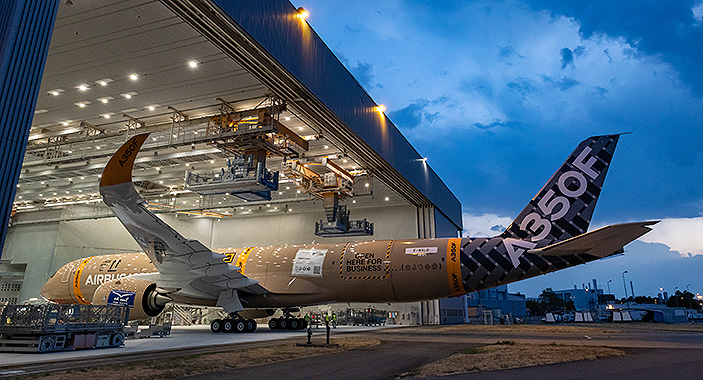
Asia-Pacific will remain the leading region for international air cargo traffic, with routes to North America the largest (3.8% annual growth rate), followed by Europe. Airbus said its newest freighter, the A350F, can operate these routes efficiently. North America and Asia-Pacific will lead regional demand for the 2,670 freighter deliveries, requiring 925 and 850 aircraft, respectively, and together accounting for two-thirds of total global demand.
Over the next 20 years, more previous-generation freighters will be retired and replaced by highly efficient next-generation freighters. This includes new-build models such as the A350F, as well as passenger-to-freighter conversions across the A320, A321, and A330 families, helping operators lower fuel consumption and reduce carbon emissions.

