
News
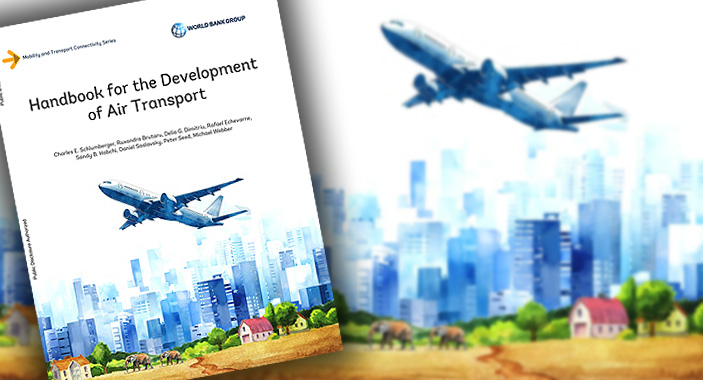
World Bank publishes Handbook for the Development of Air Transportation
July 3rd 2026
The World Bank announced this week that it has published the Handbook for the Development of Air Transportation, a comprehensive and accessible guide designed to strengthen aviation ecosystems worldwide. Read More » “Air transport is a critical enabler of national and global economic integration, connecting people, goods, and markets across developing and advanced economies alike. Yet among transport generalists, government officials, civil service professionals, and development practitioners, there remains a significant gap in understanding the complex institutional, regulatory, financial, and operational dimensions of the aviation sector,” the World Bank said, adding that the handbook addresses that gap by providing a concise yet comprehensive guide to the foundational principles of air transport, with particular relevance to developing and emerging markets where the World Bank Group is most active.
Subsequent chapters address the finance and economics of air transport, covering competition policy, access rights, air service agreements, open skies policies, and demand forecasting for both passengers and freight. The Handbook explores the revenue structures of airlines, airports, and air navigation service providers, including fee and levy setting, as well as corporate governance, oversight and compliance, infrastructure, business development, and operational management across these key sub-sectors. The Handbook also covers the regulatory and operational dimensions of environmental impact management, including noise, emissions, and water pollution, and discusses the sector’s broader implications for climate change — including the Carbon Offsetting and Reduction Scheme for International Aviation (CORSIA), the Airports Council International Airport Carbon Accreditation Program, and aviation’s contributions to Nationally Determined Contributions (NDCs). The Handbook also addresses emerging issues such as aviation decarbonization, sustainable aviation fuels, and new technologies, including unmanned aerial vehicles, examining them through the lens of developing-country contexts.
The publication has been developed with input from key partner organizations, including the International Civil Aviation Organization (ICAO), the International Air Transport Association (IATA), and Airports Council International (ACI), to ensure alignment with global standards and good practice, the authors said.

